Contents
Articles
2026
- Upcoming work profile support for Googlebook first look
- A week with Googlebook
- Googlebook in enterprise? Here's my wishlist
- Googlebooks meet enterprise, eventually
- Zero-touch initiation comes to the app generators
- I built an app for my son's music lessons, then reported its API out of existence
- What the last decade of Android Enterprise DPC migration could have been
- Introducing DeltaWatch: web change detection
- Android Enterprise lands on Android XR
- How MIKA works: building an AI assistant for bayton.org
- Bayton.org goes AI-first: meet MIKA
- TCL Note A1 NXTPAPER hands-on
- What's new in the 2026 Android Security Paper?
- MDM is dead. Long live ACE?
- Introducing AMAPI Commander: converse with your Android estate
- MANAGED INFO is going licence-free
2025
- Google Play Protect is now the custom DPC gatekeeper, and everyone is a threat by default
- 12 deliveries of AE-mas (What shipped in Android Enterprise in 2025)
- The 12 AE requests of Christmas (2025 Edition)
- RCS Archival and you: clearing up the misconceptions
- Device Trust from Android Enterprise: What it is and how it works (hands-on)
- Android developer verification: what this means for consumers and enterprise
- AMAPI finally supports direct APK installation, this is how it works
- The Android Management API doesn't support pulling managed properties (config) from app tracks. Here's how to work around it
- Hands-on with CVE-2025-22442, a work profile sideloading vulnerability affecting most Android devices today
- AAB support for private apps in the managed Google Play iFrame is coming, take a first look here
- What's new (so far) for enterprise in Android 16
2024
- Android 15: What's new for enterprise?
- How Goto's acquisition of Miradore is eroding a once-promising MDM solution
- Google Play Protect no longer sends sideloaded applications for scanning on enterprise-managed devices
- Mobile Pros is moving to Discord
- Avoid another CrowdStrike takedown: Two approaches to replacing Windows
- Introducing MANAGED SETTINGS
- I'm joining NinjaOne
- Samsung announces Knox SDK restrictions for Android 15
- What's new (so far) for enterprise in Android 15
- Google quietly introduces new quotas for unvalidated AMAPI use
- What is Play Auto Install (PAI) in Android and how does it work?
- AMAPI publicly adds support for DPC migration
- How do Android devices become certified?
2023
- Mute @channel & @here notifications in Slack
- A guide to raising better support requests
- Ask Jason: How should we manage security and/or OS updates for our devices?
- Pixel 8 series launches with 7 years of software support
- Android's work profile behaviour has been reverted in 14 beta 5.3
- Fairphone raises the bar with commitment to Android updates
- Product files: The DoorDash T8
- Android's work profile gets a major upgrade in 14
- Google's inactive account policy may not impact Android Enterprise customers
- Product files: Alternative form factors and power solutions
- What's new in Android 14 for enterprise
- Introducing Micro Mobility
- Android Enterprise: A refresher
2022
- What I'd like to see from Android Enterprise in 2023
- Thoughts on Android 12's password complexity changes
- Google Play target API requirements & impact on enterprise applications
- Sunsetting Discuss comment platform
- Google publishes differences between Android and Android Go
- Android Go & EMM support
- Relaunching bayton.org
- AER dropped the 3/5 year update mandate with Android 11, where are we now?
- I made a bet with Google (and lost)
2020
- Product files: Building Android devices
- Google announce big changes to zero-touch
- VMware announces end of support for Device Admin
- Google launch the Android Enterprise Help Community
- Watch: An Android Enterprise discussion with Hypergate
- Listen again: BM podcast #144 - Jason Bayton & Russ Mohr talk Android!
- Google's Android Management API will soon support COPE
- Android Enterprise in 11: Google reduces visibility and control with COPE to bolster privacy.
- The decade that redefined Android in the enterprise
2019
- Why Intune doesn't support Android Enterprise COPE
- VMware WS1 UEM 1908 supports Android Enterprise enrolments on closed networks and AOSP devices
- The Bayton 2019 Android Enterprise experience survey
- Android Enterprise Partner Summit 2019 highlights
- The Huawei ban and Enterprise: what now?
- Dabbling with Android Enterprise in Q beta 3
- Why I moved from Google WiFi to Netgear Orbi
- I'm joining Social Mobile as Director of Android Innovation
- Android Enterprise in Q/10: features and clarity on DA deprecation
- MWC 2019: Mid-range devices excel, 5G everything, form-factors galore and Android Enterprise
- UEM tools managing Android-powered cars
- Joining the Android Enterprise Experts community
- February was an interesting month for OEMConfig
- Google launch Android Enterprise Recommended for Managed Service Providers
- Migrating from Windows 10 Mobile? Here's why you should consider Android
- AER expands: Android Enterprise Recommended for EMMs
- What I'd like to see from Android Enterprise in 2019
2018
- My top Android apps in 2018
- Year in review: 2018
- MobileIron Cloud R58 supports Android Enterprise fully managed devices with work profiles
- Hands on with the Huawei Mate 20 Pro
- Workspace ONE UEM 1810 introduces support for Android Enterprise fully managed devices with work profiles
- G Suite no longer prevents Android data leakage by default
- Live: Huawei Mate series launch
- How to sideload the Digital Wellbeing beta on Pie
- How to manually update the Nokia 7 Plus to Android Pie
- Hands on with the BQ Aquaris X2 Pro
- Hands on with Sony OEMConfig
- The state of Android Enterprise in 2018
- BYOD & Privacy: Don’t settle for legacy Android management in 2018
- Connecting two Synologies via SSH using public and private key authentication
- How to update Rsync on Mac OS Mojave and High Sierra
- Intune gains support for Android Enterprise COSU deployments
- Android Enterprise Recommended: HMD Global launch the Nokia 3.1 and Nokia 5.1
- Android Enterprise Partner Summit 2018 highlights
- Live: MobileIron LIVE! 2018
- Android Enterprise first: AirWatch 9.4 lands with a new name and focus
- Live: Android Enterprise Partner Summit 2018
- Samsung, Oreo and an inconsistent Android Enterprise UX
- MobileIron launch Android Enterprise work profiles on fully managed devices
- Android P demonstrates Google's focus on the enterprise
- An introduction to managed Google Play
- MWC 2018: Android One, Oreo Go, Android Enterprise Recommended & Android Enterprise
- Enterprise ready: Google launch Android Enterprise Recommended
2017
- Year in review: 2017
- Google is deprecating device admin in favour of Android Enterprise
- Hands on with the Sony Xperia XZ1 Compact
- Moto C Plus giveaway
- The state of Android Enterprise in 2017
- Samsung launched a Note 8 for enterprise
- MobileIron officially supports Android Enterprise QR code provisioning
- Android zero-touch enrolment has landed
- MobileIron unofficially supports QR provisioning for Android Enterprise work-managed devices, this is how I found it
- Hands on with the Nokia 3
- Experimenting with clustering and data replication in Nextcloud with MariaDB Galera and SyncThing
- Introducing documentation on bayton.org
- Goodbye Alexa, Hey Google: Hands on with the Google Home
- Restricting access to Exchange ActiveSync
- What is Mobile Device Management?
- 8 tips for a successful EMM deployment
- Long-term update: the fitlet-RM, a fanless industrial mini PC by Compulab
- First look: the FreedomPop V7
- Vault7 and the CIA: This is why we need EMM
- What is Android Enterprise (Android for Work) and why is it used?
- Introducing night mode on bayton.org
- What is iOS Supervision and why is it used?
- Hands on with the Galaxy TabPro S
- Introducing Nextcloud demo servers
- Part 4 - Project Obsidian: Obsidian is dead, long live Obsidian
2016
- My top Android apps 2016
- Hands on with the Linx 12V64
- Wandera review 2016: 2 years on
- Deploying MobileIron 9.1+ on KVM
- Hands on with the Nextcloud Box
- How a promoted tweet landed me on Finnish national news
- Using RWG Mobile for simple, cross-device centralised voicemail
- Part 3 – Project Obsidian: A change, data migration day 1 and build day 2
- Hands on: fitlet-RM, a fanless industrial mini PC by Compulab
- Part 2 - Project Obsidian: Build day 1
- Part 1 - Project Obsidian: Objectives & parts list
- Part 0 - Project Obsidian: Low power NAS & container server
- 5 Android apps improving my Chromebook experience
- First look: Android apps on ChromeOS
- Competition: Win 3 months of free VPS/Container hosting - Closed!
- ElasticHosts review
- ElasticHosts: Cloud Storage vs Folders, what's the difference?
- Adding bash completion to LXD
- Android N: First look & hands-on
- Springs.io - Container hosting at container prices
- Apple vs the FBI: This is why we need MDM
- Miradore Online MDM: Expanding management with subscriptions
- Lenovo Yoga 300 (11IBY) hard drive upgrade
- I bought a Lenovo Yoga 300, this is why I'm sending it back
- Restricting access to Exchange ActiveSync
- Switching to HTTPS on WordPress
2015
2014
- Is CYOD the answer to the BYOD headache?
- BYOD Management: Yes, we can wipe your phone
- A fortnight with Android Wear: LG G Watch review
- First look: Miradore Online free MDM
- Hands on: A weekend with Google Glass
- A month with Wandera Mobile Gateway
- Final thoughts: Dell Venue Pro 11 (Atom)
- Thoughts on BYOD
- Will 2014 bring better battery life?
- My year in review: Bayton.org
- The best purchase I've ever made? A Moto G for my father
2013
2012
- My Top Android Apps 12/12
- The Nexus 7 saga: Resolved
- Recycling Caps Lock into something useful - Ubuntu (12.04)
- The Nexus 7 saga continues
- From Wows to Woes: Why I won't be recommending a Nexus7 any time soon.
- Nexus7: What you need to know
- Why I disabled dlvr.it links on Facebook
- HTC Sense: Changing the lockscreen icons from within ADW
2011
- Push your Google+ posts to Twitter and Facebook
- Using multiple accounts with Google.
- The "Wn-R48" (Windows on the Cr-48)
- Want a Google+ invite?
- Publishing to external sources from Google+
- Dell Streak review. The Phone/Tablet Hybrid
- BlueInput: The Bluetooth HID driver Google forgot to include
- Pushing Buzz to Twitter with dlvr.it
- Managing your social outreach with dlvr.it
- When Awe met Some. The Cr-48 and Gnome3.
- Living with Google's Cr-48 and the cloud.
- Downtime 23-25/04/2011
- Are you practising "safe surfing"?
- The Virtualbox bug: "Cannot access the kernel driver" in Windows
- Putting tech into perspective
2010
- Have a Google Buzz Christmas
- Root a G1 running Android 1.6 without recovery!
- Windows 7 display issues on old Dell desktops
- Google added the Apps flexibility we've been waiting for!
- Part I: My 3 step program for moving to Google Apps
- Downloading torrents
- Completing the Buzz experience for Google Maps Mobile
- Quicktip: Trial Google Apps
- Quicktip: Save internet images fast
- Turn your desktop 3D!
- Part III - Device not compatible - Skype on 3
- Swype not compatible? ShapeWriter!
- Don't wait, get Swype now!
- HideIP VPN. Finally!
- Google enables Wave for Apps domains
- Aspire One touch screen
- Streamline XP into Ubuntu
- Edit a PDF with Zamzar
- Google offering Gmail addresses in the UK
- Google Wave: Revolutionising blogs!
- Hexxeh's Google Chrome OS builds
- Update: Buzz on Windows Mobile
- Alternatives to Internet Explorer
- Wordress 3.0 is coming!
- Skype for WM alternatives
- Browsing on a (data) budget? Opera!
- Buzz on unsupported mobiles
- Buzz on your desktop
- What's all the Buzz?
- Part II: Device not compatible - Skype on 3
- Part I - Device not compatible - Skype on 3
- Dreamscene on Windows 7
- Free Skype with 3? There's a catch..
I built an app for my son's music lessons, then reported its API out of existence
Contents
My son has brass lessons through Gwent Music, the Newport City Council music service. Like a lot of these services, the admin all lives in a parent portal, in this case one run by Paritor on their Xperios platform. Timetables, secure messages from the tutor, invoices, the usual.
The portal is fine. But I wanted the information on my phone the way I want everything on my phone: a native app, a glance at the next lesson, a notification when the tutor moves a session, quick access to messages, etc. So I decided to build one. What I did not expect was that the project would end with me reporting the platform's API to the council, the API getting locked down as a result, and my own app losing the only door it had to make it viable.
I reported my project to death.
The original goal
#The objective I set was small: read my own Gwent Music data on my own phone, without logging into the portal every time. Next lesson on the home screen, the schedule, my messages, my account. Read-mostly, native, no WebView wrapper around the website. If it worked, I would tidy it up and share it around the community.
Initial exploration
#The first thing I did was work out how the portal talked to its backend. My early conclusion was pessimistic: there was no obvious public API key, the portal's login token did not look like it was scoped for direct API use, and I assumed I would have to drive the website with a headless browser and scrape it. Sloggish, but doable.
Then I dug properly into the Azure AD B2C tenant behind the sign-in. In the portal's own sign-in traffic I only ever saw an identity token handed to the browser, no use for calling the API directly, which was the dead end above. But the same tenant also exposed a public OAuth client, no secret, that would mint an access token genuinely scoped for the API, and it accepted a loopback redirect back to localhost. Public clients like that are meant to be driven by an app the user controls, so there was nothing stopping me completing the very same flow from my own: a standard system-browser authorisation-code exchange with PKCE, ending in a real, API-scoped token. No scraping. A real token, from the real identity provider, for the real API.
That API was reachable from the public internet, and so was its OpenAPI document, all 2,600-odd operations of it. Whether that direct reachability was ever meant to be public, I genuinely do not know. It was, though.
What I found
#The API is supposed to check two things on every request: a system key identifying the music service, and your personal login token proving who you are. I found two problems that, together, were serious:
- The system key was not a secret. It is written into the parent portal's own page. Any logged-in parent could read the customer's key straight out of their own session.
- The API did not actually enforce the login token. Requests carrying only that shared key, with no personal token at all, were accepted and returned data.
Put those together and the single value protecting the whole service was a key that every parent could already see. And because access was keyed off identifiers in the request rather than off who you were, the data that came back was whatever the identifier pointed at, with nothing tying that identifier to the caller. That is textbook broken object-level authorisation, sitting on top of a shared secret handed to every end user.
I proved it against my own account only. With just the key and no token, I could retrieve my own messages and my own contact record. That's where I stopped, because good grief.
I wasn't about to start actively proving I could manipulate the service as that'd land me in trouble, so everything I say below about the wider blast radius came from my reading of the platform's own published interface, not something I ran directly. Part of it was borne out later - Paritor acted on the narrower follow-up about the admin surface - but the full reach I never tested, and nobody confirmed it for me.
That reading was not comforting. The same key could - according to my understanding - reach other families' messages, contacts, pupil records and billing; it could reach endpoints that list every pupil and every staff member; and it could reach an account-management surface that included password resets and removing multi-factor authentication. On paper, one key any parent could copy was enough to walk from "a parent" to "any account, including staff".
This is children's data. I couldn't rightly let it sit like this.
Shooting myself in the foot
#The sensible, and frankly obvious, thing to do at this point was to stop admiring my clever little app and report the hole. Which I then did. The property that made the app possible up to this point, an API a client could reach directly with a parent's own credentials, was the property that had to be fixed.
My assumption was once Paritor picked up on the issue, they'd simply address the gap - requiring both the API key and the bearer of the account, limiting retrieval of data to the user scope, and just lock down those endpoints a parent is not supposed to access at all.
Disclosure
#Gwent Music is run by Newport City Council, and the council is the data controller for my son's information, so the council's Data Protection Officer was the correct place to start. On 4 September I reported it privately to the council's information-management team and copied Gwent Music, setting out what I had found.
I was clear that this looked like Paritor's platform rather than anything Gwent Music had built. The portal, the API and the login all belong to Paritor, hosted on their infrastructure, with Gwent Music as one customer among many. That meant the same weakness would affect every organisation on the platform, and only Paritor could actually fix it, but the council needed to know and was best placed to push.
The council acknowledged it on 7 September and said they were investigating.
What they did first
#On 8 September the council came back to say it was resolved. I checked, and the specific thing I had reported was genuinely fixed - requests carrying only the shared key, with no login token, were now refused - good, and fast.
But while confirming that, I found the fix did not appear to cover everything.
My follow-up
#Using nothing more than my own ordinary parent login, I could still reach the administrative and identity functions, the ones that look up and list user accounts and read system configuration, that a parent account should have no business touching. The key-only data leak was closed, but the underlying problem behind it, the system not properly checking whether the logged-in user was allowed to do a thing, still applied to the admin surface. It looked like the specific hole had been patched rather than the root cause.
I said so, again through the council, and waited.
What they did to close it off
#On 10 September the council relayed Paritor's response: the follow-up was correct, and it had been acted on. The account lookups and identity functions I rechecked now refused a parent login. Separately, an earlier slowdown I had noticed turned out to be a hosting-capacity issue that had since been fixed. The council closed their security involvement and pointed the remaining "so can my app exist" questions at Gwent Music.
The leftover question
#Paritor told the council the object-level check now behaves as it should and matches their own testing, which I am inclined to take at face value. I just could not confirm it from outside: the API answers a parent request with a 401 (outright rejection) rather than the 403 (recognised, but not allowed) I would expect from a real permission check, and a blanket 401 looks the same whether a proper per-record check sits behind it or the whole route is simply bolted shut. I did not feel it worth the continued prodding since the route is closed either way.
So I left that question on the record with the council, along with a request: if the direct-to-API route is ever reopened, intentionally or otherwise, they'd need to immediately check a parent account can't still access those old routes.
The app I shot in the foot
#Which brings me to the project, because it did work, and I am quite happy with it!
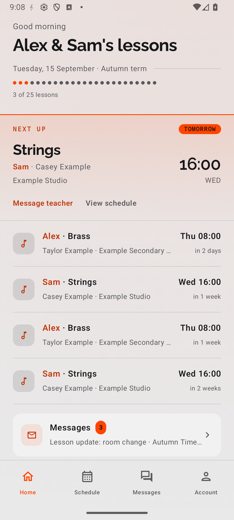
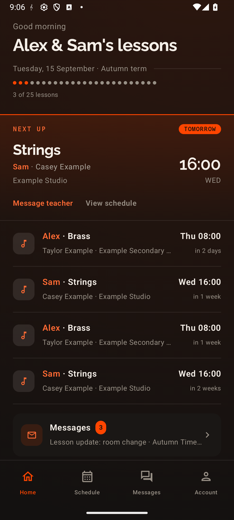
It is a native Android app in Kotlin and Jetpack Compose. No WebView, no wrapper around the website, just Compose screens over a repository layer that turns the API into clean screen models. Authentication is a custom loopback flow: a system-browser tab, authorisation code with PKCE, tokens kept in Keystore-backed encrypted storage, silent refresh, and a clean reconnect state when refresh fails. Not AppAuth, not a WebView, no password ever touching the app itself.
A few things I am particularly pleased with:
- Offline snapshots with transparent freshness. Each screen keeps its last good data in a per-account DataStore snapshot, so the app opens to content instantly and then shows you whether what you are looking at is live, refreshing, or stale because a refresh failed. We love a good bit of caching.
- Notifications without a server. WorkManager does best-effort background polling and raises local reminders and change alerts, so a moved lesson pings the phone, with quiet hours and privacy-safe payloads, and no push infrastructure to run. Why not just hook in firebase? It wouldn't work on some of my AOSP devices, and I didn't need the added infra.
- Self-update. Because this was never going near a store, it has an optional in-app updater that checks a CDN manifest, verifies the download by hash and signing certificate before handing off to Android's installer, and is trivial to rip out if you do not want it.
- Built to be looked at. Full light and dark theming, a Go mock server so the whole thing builds and runs with seeded fake data and no account at all, and a real test suite with enforced coverage floors wired into CI.
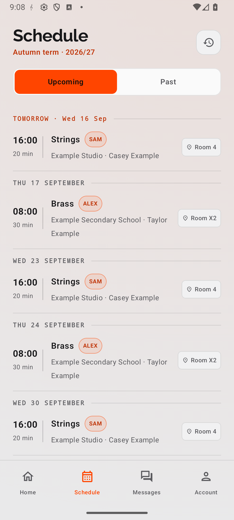
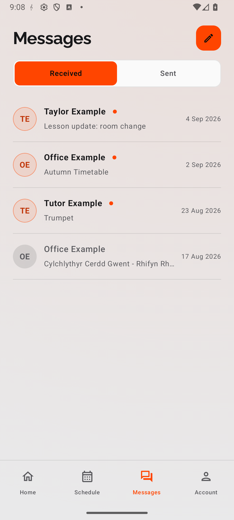
It is roughly 170 source files, it builds keyless from a clean checkout against the mock, and it is a decent reference for how I would put a modern Android client together in 2026.
Since it can no longer function against the live service, I have open-sourced it as an archived reference implementation, MIT licensed, with no keys and nothing that reaches real data:
github.com/jasonbayton/gwent-music-android
I asked if I could keep it going
#Before shelving it, I put the obvious question to Gwent Music: now the leak was closed, was there any supported way for an app like mine, an authenticated parent reading their own data, to carry on? I offered to maintain it properly, and I said plainly that if they would rather not have a community-built app in the mix, that was entirely understood and it simply ended the road.
The answer, relayed from Paritor, was a courteous no. The Xperios API is a private interface between Paritor's own applications and the service, not a published integration surface: not documented for external use, changed without notice, no compatibility commitments, so anything built against it would break sooner or later.
At least, it is now, prior to this incident it was open to the internet with a full OpenAPI reference to read from!
On top of that, the data belongs to Gwent Music as the controller, so opening a route for independent apps was not Paritor's to grant on the music service's behalf. As controller that approval was Gwent Music's to give, and they relayed the no without offering it, which I took as them being content to leave it there.
They did have a genuinely useful answer to what I actually wanted, though: a Paritor parent app is close to release, a supported and maintained alternative to the web portal, built for exactly the on-the-go access I was after. Which is the right home for this, and honestly a better outcome than a lone parent maintaining an app against an interface that was never meant to be public.
So that was that. My app did not die because the API shifted under it. It died because the people who own the data and the platform said no, reasonably, and are shipping their own. Fair enough, really.
The moral, such as it is
#If you find something like this, report it to the data controller, keep strictly to your own account, and write down what you did not do as carefully as you can. You might close a real hole in a system holding children's data. You might also close your own weekend project in the process.
Do it anyway.
Articles
2026
- Upcoming work profile support for Googlebook first look
- A week with Googlebook
- Googlebook in enterprise? Here's my wishlist
- Googlebooks meet enterprise, eventually
- Zero-touch initiation comes to the app generators
- I built an app for my son's music lessons, then reported its API out of existence
- What the last decade of Android Enterprise DPC migration could have been
- Introducing DeltaWatch: web change detection
- Android Enterprise lands on Android XR
- How MIKA works: building an AI assistant for bayton.org
- Bayton.org goes AI-first: meet MIKA
- TCL Note A1 NXTPAPER hands-on
- What's new in the 2026 Android Security Paper?
- MDM is dead. Long live ACE?
- Introducing AMAPI Commander: converse with your Android estate
- MANAGED INFO is going licence-free
2025
- Google Play Protect is now the custom DPC gatekeeper, and everyone is a threat by default
- 12 deliveries of AE-mas (What shipped in Android Enterprise in 2025)
- The 12 AE requests of Christmas (2025 Edition)
- RCS Archival and you: clearing up the misconceptions
- Device Trust from Android Enterprise: What it is and how it works (hands-on)
- Android developer verification: what this means for consumers and enterprise
- AMAPI finally supports direct APK installation, this is how it works
- The Android Management API doesn't support pulling managed properties (config) from app tracks. Here's how to work around it
- Hands-on with CVE-2025-22442, a work profile sideloading vulnerability affecting most Android devices today
- AAB support for private apps in the managed Google Play iFrame is coming, take a first look here
- What's new (so far) for enterprise in Android 16
2024
- Android 15: What's new for enterprise?
- How Goto's acquisition of Miradore is eroding a once-promising MDM solution
- Google Play Protect no longer sends sideloaded applications for scanning on enterprise-managed devices
- Mobile Pros is moving to Discord
- Avoid another CrowdStrike takedown: Two approaches to replacing Windows
- Introducing MANAGED SETTINGS
- I'm joining NinjaOne
- Samsung announces Knox SDK restrictions for Android 15
- What's new (so far) for enterprise in Android 15
- Google quietly introduces new quotas for unvalidated AMAPI use
- What is Play Auto Install (PAI) in Android and how does it work?
- AMAPI publicly adds support for DPC migration
- How do Android devices become certified?
2023
- Mute @channel & @here notifications in Slack
- A guide to raising better support requests
- Ask Jason: How should we manage security and/or OS updates for our devices?
- Pixel 8 series launches with 7 years of software support
- Android's work profile behaviour has been reverted in 14 beta 5.3
- Fairphone raises the bar with commitment to Android updates
- Product files: The DoorDash T8
- Android's work profile gets a major upgrade in 14
- Google's inactive account policy may not impact Android Enterprise customers
- Product files: Alternative form factors and power solutions
- What's new in Android 14 for enterprise
- Introducing Micro Mobility
- Android Enterprise: A refresher
2022
- What I'd like to see from Android Enterprise in 2023
- Thoughts on Android 12's password complexity changes
- Google Play target API requirements & impact on enterprise applications
- Sunsetting Discuss comment platform
- Google publishes differences between Android and Android Go
- Android Go & EMM support
- Relaunching bayton.org
- AER dropped the 3/5 year update mandate with Android 11, where are we now?
- I made a bet with Google (and lost)
2020
- Product files: Building Android devices
- Google announce big changes to zero-touch
- VMware announces end of support for Device Admin
- Google launch the Android Enterprise Help Community
- Watch: An Android Enterprise discussion with Hypergate
- Listen again: BM podcast #144 - Jason Bayton & Russ Mohr talk Android!
- Google's Android Management API will soon support COPE
- Android Enterprise in 11: Google reduces visibility and control with COPE to bolster privacy.
- The decade that redefined Android in the enterprise
2019
- Why Intune doesn't support Android Enterprise COPE
- VMware WS1 UEM 1908 supports Android Enterprise enrolments on closed networks and AOSP devices
- The Bayton 2019 Android Enterprise experience survey
- Android Enterprise Partner Summit 2019 highlights
- The Huawei ban and Enterprise: what now?
- Dabbling with Android Enterprise in Q beta 3
- Why I moved from Google WiFi to Netgear Orbi
- I'm joining Social Mobile as Director of Android Innovation
- Android Enterprise in Q/10: features and clarity on DA deprecation
- MWC 2019: Mid-range devices excel, 5G everything, form-factors galore and Android Enterprise
- UEM tools managing Android-powered cars
- Joining the Android Enterprise Experts community
- February was an interesting month for OEMConfig
- Google launch Android Enterprise Recommended for Managed Service Providers
- Migrating from Windows 10 Mobile? Here's why you should consider Android
- AER expands: Android Enterprise Recommended for EMMs
- What I'd like to see from Android Enterprise in 2019
2018
- My top Android apps in 2018
- Year in review: 2018
- MobileIron Cloud R58 supports Android Enterprise fully managed devices with work profiles
- Hands on with the Huawei Mate 20 Pro
- Workspace ONE UEM 1810 introduces support for Android Enterprise fully managed devices with work profiles
- G Suite no longer prevents Android data leakage by default
- Live: Huawei Mate series launch
- How to sideload the Digital Wellbeing beta on Pie
- How to manually update the Nokia 7 Plus to Android Pie
- Hands on with the BQ Aquaris X2 Pro
- Hands on with Sony OEMConfig
- The state of Android Enterprise in 2018
- BYOD & Privacy: Don’t settle for legacy Android management in 2018
- Connecting two Synologies via SSH using public and private key authentication
- How to update Rsync on Mac OS Mojave and High Sierra
- Intune gains support for Android Enterprise COSU deployments
- Android Enterprise Recommended: HMD Global launch the Nokia 3.1 and Nokia 5.1
- Android Enterprise Partner Summit 2018 highlights
- Live: MobileIron LIVE! 2018
- Android Enterprise first: AirWatch 9.4 lands with a new name and focus
- Live: Android Enterprise Partner Summit 2018
- Samsung, Oreo and an inconsistent Android Enterprise UX
- MobileIron launch Android Enterprise work profiles on fully managed devices
- Android P demonstrates Google's focus on the enterprise
- An introduction to managed Google Play
- MWC 2018: Android One, Oreo Go, Android Enterprise Recommended & Android Enterprise
- Enterprise ready: Google launch Android Enterprise Recommended
2017
- Year in review: 2017
- Google is deprecating device admin in favour of Android Enterprise
- Hands on with the Sony Xperia XZ1 Compact
- Moto C Plus giveaway
- The state of Android Enterprise in 2017
- Samsung launched a Note 8 for enterprise
- MobileIron officially supports Android Enterprise QR code provisioning
- Android zero-touch enrolment has landed
- MobileIron unofficially supports QR provisioning for Android Enterprise work-managed devices, this is how I found it
- Hands on with the Nokia 3
- Experimenting with clustering and data replication in Nextcloud with MariaDB Galera and SyncThing
- Introducing documentation on bayton.org
- Goodbye Alexa, Hey Google: Hands on with the Google Home
- Restricting access to Exchange ActiveSync
- What is Mobile Device Management?
- 8 tips for a successful EMM deployment
- Long-term update: the fitlet-RM, a fanless industrial mini PC by Compulab
- First look: the FreedomPop V7
- Vault7 and the CIA: This is why we need EMM
- What is Android Enterprise (Android for Work) and why is it used?
- Introducing night mode on bayton.org
- What is iOS Supervision and why is it used?
- Hands on with the Galaxy TabPro S
- Introducing Nextcloud demo servers
- Part 4 - Project Obsidian: Obsidian is dead, long live Obsidian
2016
- My top Android apps 2016
- Hands on with the Linx 12V64
- Wandera review 2016: 2 years on
- Deploying MobileIron 9.1+ on KVM
- Hands on with the Nextcloud Box
- How a promoted tweet landed me on Finnish national news
- Using RWG Mobile for simple, cross-device centralised voicemail
- Part 3 – Project Obsidian: A change, data migration day 1 and build day 2
- Hands on: fitlet-RM, a fanless industrial mini PC by Compulab
- Part 2 - Project Obsidian: Build day 1
- Part 1 - Project Obsidian: Objectives & parts list
- Part 0 - Project Obsidian: Low power NAS & container server
- 5 Android apps improving my Chromebook experience
- First look: Android apps on ChromeOS
- Competition: Win 3 months of free VPS/Container hosting - Closed!
- ElasticHosts review
- ElasticHosts: Cloud Storage vs Folders, what's the difference?
- Adding bash completion to LXD
- Android N: First look & hands-on
- Springs.io - Container hosting at container prices
- Apple vs the FBI: This is why we need MDM
- Miradore Online MDM: Expanding management with subscriptions
- Lenovo Yoga 300 (11IBY) hard drive upgrade
- I bought a Lenovo Yoga 300, this is why I'm sending it back
- Restricting access to Exchange ActiveSync
- Switching to HTTPS on WordPress
2015
2014
- Is CYOD the answer to the BYOD headache?
- BYOD Management: Yes, we can wipe your phone
- A fortnight with Android Wear: LG G Watch review
- First look: Miradore Online free MDM
- Hands on: A weekend with Google Glass
- A month with Wandera Mobile Gateway
- Final thoughts: Dell Venue Pro 11 (Atom)
- Thoughts on BYOD
- Will 2014 bring better battery life?
- My year in review: Bayton.org
- The best purchase I've ever made? A Moto G for my father
2013
2012
- My Top Android Apps 12/12
- The Nexus 7 saga: Resolved
- Recycling Caps Lock into something useful - Ubuntu (12.04)
- The Nexus 7 saga continues
- From Wows to Woes: Why I won't be recommending a Nexus7 any time soon.
- Nexus7: What you need to know
- Why I disabled dlvr.it links on Facebook
- HTC Sense: Changing the lockscreen icons from within ADW
2011
- Push your Google+ posts to Twitter and Facebook
- Using multiple accounts with Google.
- The "Wn-R48" (Windows on the Cr-48)
- Want a Google+ invite?
- Publishing to external sources from Google+
- Dell Streak review. The Phone/Tablet Hybrid
- BlueInput: The Bluetooth HID driver Google forgot to include
- Pushing Buzz to Twitter with dlvr.it
- Managing your social outreach with dlvr.it
- When Awe met Some. The Cr-48 and Gnome3.
- Living with Google's Cr-48 and the cloud.
- Downtime 23-25/04/2011
- Are you practising "safe surfing"?
- The Virtualbox bug: "Cannot access the kernel driver" in Windows
- Putting tech into perspective
2010
- Have a Google Buzz Christmas
- Root a G1 running Android 1.6 without recovery!
- Windows 7 display issues on old Dell desktops
- Google added the Apps flexibility we've been waiting for!
- Part I: My 3 step program for moving to Google Apps
- Downloading torrents
- Completing the Buzz experience for Google Maps Mobile
- Quicktip: Trial Google Apps
- Quicktip: Save internet images fast
- Turn your desktop 3D!
- Part III - Device not compatible - Skype on 3
- Swype not compatible? ShapeWriter!
- Don't wait, get Swype now!
- HideIP VPN. Finally!
- Google enables Wave for Apps domains
- Aspire One touch screen
- Streamline XP into Ubuntu
- Edit a PDF with Zamzar
- Google offering Gmail addresses in the UK
- Google Wave: Revolutionising blogs!
- Hexxeh's Google Chrome OS builds
- Update: Buzz on Windows Mobile
- Alternatives to Internet Explorer
- Wordress 3.0 is coming!
- Skype for WM alternatives
- Browsing on a (data) budget? Opera!
- Buzz on unsupported mobiles
- Buzz on your desktop
- What's all the Buzz?
- Part II: Device not compatible - Skype on 3
- Part I - Device not compatible - Skype on 3
- Dreamscene on Windows 7
- Free Skype with 3? There's a catch..